
There’s something that happens in summer that caregivers talk about among themselves but rarely makes it into any training manual. Some clients — people who’ve spent months quieter, slower, a little more turned inward — start to open up. The longer days help. The warmth helps. A window left open, the sound of birds, a slow walk to the end of the driveway and back. Small things that add up to something real.
If you’re thinking about a career in caregiving, or you’ve just started out, summer is a season worth understanding. It has its own rhythms, its own rewards — and caregivers who’ve worked through it tend to pick up a few tips that no training covers. This article can walk you through what warm-weather caregiving actually looks like — and why so many caregivers say it’s their favorite time of year to do this work.
Summer caregiving in Jacksonville and the surrounding areas brings it’s own unique experience — the heat is real, and the people you’re caring for feel it in ways you’ll learn to notice. Let’s discuss four caregiving tips that tend to come from experience rather than a handbook, and a look at what makes this summer season worth showing up for.
The Summer Caregiving Tips That Actually Come From Experience
Most of what gets shared about summer caregiving focuses on the obvious: drink water, stay cool, avoid the midday sun. All of that is true. But the caregivers who’ve been doing this work for a while tend to have a different list — one that’s less about rules and more about noticing.
Tip 1: Help Older Adults Stay Hydrated When They Don’t Feel Thirsty
This is one of those things that surprises a lot of new caregivers. Older people often experience a diminished sense of thirst, even when their bodies genuinely need fluids. According to the National Institute on Aging, older adults are at higher risk for heat-related illness than younger people in part because the body’s ability to regulate temperature changes with age — and the Centers for Disease Control and Prevention identifies them as one of the groups least likely to recognize when they need more water.
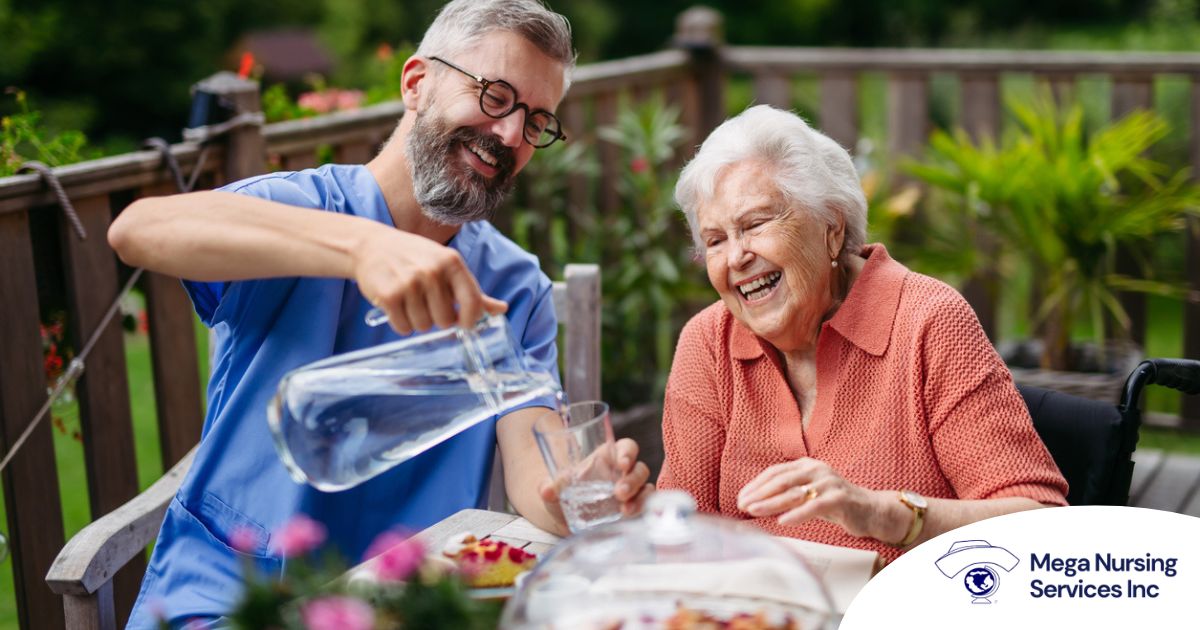
What this means in practice is that helping someone stay hydrated isn’t really about asking “have you had enough fluids today?” It’s about making drinking easy, natural, and built into the day as a healthy habit. A glass of plain water with breakfast. Something cold during a rest break. A smoothie or some fruit in the afternoon — watermelon, cucumber, and other water-rich foods count toward daily fluid intake in a way that feels more like eating than drinking, which some clients prefer.
Good caregivers find ways to encourage fluids throughout the day without making it feel like a chore. You’re not lecturing — you’re just making it easy to drink plenty without a fuss. Keeping a water bottle nearby, reminding gently rather than repeatedly, and noticing when someone hasn’t had much to drink since the morning are all part of what taking care of someone in summer actually looks like. One practical sign to watch: urine that’s darker than usual is often an early indicator that someone needs more water, and it’s worth noting if you observe it.
Tip 2: Plan Outdoor Activities Around the Heat
If a client wants to spend time outside — tending to a small garden, sitting on the porch, taking a short walk, or getting some gentle exercise — earlier in the day is almost always better. Heat builds through the morning and peaks in the early afternoon, and outdoor safety for seniors depends a lot on timing.
Many experienced caregivers plan outdoor activities before 10am, leaving quieter, indoor time for when the sun is highest. It’s also worth thinking through the simple things: wearing a hat, applying sunscreen, carrying a water bottle, finding shade to rest in. These aren’t burdensome precautions — they’re just part of making outdoor time genuinely enjoyable rather than draining.
Falls are another hazard worth keeping in mind outdoors. Uneven surfaces, garden hoses left across walkways, wet patios — older adults can be more susceptible to balance challenges in heat, and a quick scan of the outdoor space before a walk is a small habit that goes a long way.
This isn’t about restricting what clients can do. It’s about making sure the things they enjoy are actually fun — not exhausting.
Tip 3: Don’t Assume Air Conditioning Is Always the Comfort You’d Expect
Here’s one that tends to catch new caregivers off guard: some older clients resist turning the air conditioning on, even on genuinely hot days. For some, it’s habit. For others, it makes them feel cold or uncomfortable in ways that are hard to articulate. And for a few, there’s a cost concern they may not mention directly.
Navigating this with care — finding a temperature that’s safe without making someone feel like their comfort doesn’t matter — is a small but real skill. It’s also a good example of what summer caregiving teaches you more broadly: being helpful isn’t always the same as being right. Sometimes it’s about listening, adjusting, and finding the middle ground.
Tip 4: Know the Symptoms Worth Taking Seriously When You’re Taking Care of Someone in the Heat
One of the best caregiving tips for any new caregiver — summer or otherwise — is to trust your instincts and ask for support when something feels off. If a client seems more confused than usual, is unusually fatigued, has skin that feels hot and dry, is sweating heavily or has stopped sweating altogether, or has gone a long time without drinking despite your encouragement, those are symptoms worth flagging to a supervisor promptly.
You don’t need to diagnose anything or determine whether someone needs medical help or treatment on your own — that’s not your role. What is your role is noticing, communicating clearly, and making sure the right people know what you’re seeing. In Jacksonville’s summer heat, staying in close communication with your team about how clients are doing is something the best caregivers make a consistent habit of. When in doubt, encourage the client or their family to contact their doctor.
What Does Summer Caregiving Mean for Someone Thinking About the Career?
If you’re considering home care as a career path, summer is a meaningful season to think about.
Is Caregiving in Warm Weather Physically Demanding?
It can be, depending on the client and the setting. Shifts that involve helping someone get dressed, move around the home, or get in and out of a vehicle take the same energy in summer as any other time of year — and heat can make physical work feel more tiring for caregivers too. Sweating through a morning shift is real, and it’s worth staying on top of your own hydration just as much as your client’s.
That said, home care work is generally paced and manageable. You’re not working in an institutional setting with heavy patient loads. Most caregivers describe their summer shifts as steady rather than intense, with natural rest built into the day. The flexibility that comes with home care scheduling — including the ability to plan around heat and weather — makes a real difference.
Why Summer Brings Out Something Special in This Work
Caregivers who love summer tend to talk about the same things. Clients who come alive in the warmth. The chance to spend time outside together. The slower, more human pace that the season seems to invite.
There’s also something about the light. Longer days mean more time that doesn’t feel like nighttime — and for older adults who can sometimes feel isolated or anxious, that shift matters. According to the Family Caregiver Alliance, social connection and engagement are among the strongest protective factors for senior wellbeing, and summer naturally creates more opportunities for both. A family member stopping by for a porch visit. A walk that turns into a longer conversation. The small things that help people cope with the quiet parts of aging with more ease and less stress.
For a caregiver who shows up consistently, pays attention, and genuinely cares about the person they’re working with, summer can be a season of real connection. Those walks to the end of the driveway. The afternoon iced tea. The client who mentions, almost offhand, that this is the best summer they’ve had in years.
Thinking About a Caregiving Career in Jacksonville?
If summer has you thinking about what it would feel like to do this work, Mega Nursing Services is always looking for caring, attentive people to join our team. What matters most is showing up with patience, warmth, and a genuine interest in the people you’re taking care of.
Our caregivers support older adults and people with disabilities across Jacksonville and Jacksonville Beach, Orange Park, Fruit Cove, Avondale, Atlantic Beach, and Palm Valley with services including Alzheimer’s & Dementia Care, Pediatric Home Health, Personal Care, Respite Care, Medication Supervision, Live-In or 24-Hour Care, Homemaker Services, and Veteran Services. Learn more about what we do and what it’s like to work with us. Contact us now!